
The UN’s 17 point plan now guides our National Planning Policy
Conservatives formally baked into NPPF in 2023. Achieving sustainable development means that the planning system has three overarching objectives, an economic objective, a social objective and an environmental objective
What is the NPPF?
The NPPF (National Planning Policy Framework) is a key document in the UK’s planning system. It sets out the government’s planning policies for England and how they should be applied. First introduced in 2012 and updated multiple times since, the NPPF provides guidance for local planning authorities and developers on issues like housing, infrastructure, economic development, and environmental protection. Link
Labour plan to turn your green fields grey
Grey belt: For the purposes of plan-making and decision-making, ‘grey belt’ is defined as land in the green belt comprising Previously Developed Land and any other parcels and/or areas of Green Belt land that make a limited contribution to the five Green Belt purposes
Labour doesn’t think much of Green Belt land
Much of it is inaccessible to the public and of poor ecological status.
Labour thinks developing in Green Belt is cheaper
Green Belt land can deliver more affordable housing, infrastructure and environmental contributions, as the value of the land in its existing use is generally low and the Green Belt designation reduces the hope value associated with the prospect of securing planning permission.
Labour sets the price for Green Belt land
When assessing whether a scheme is viable, it is necessary to make an allowance for the amount of money to be paid to the landowner. This should currently be set by the local planning authority. Government could set indicative benchmark land values for land released from the Green Belt through national policy, to inform the policies developed on benchmark land value by local planning authorities. These should be set at a fair level, allowing for a premium above the existing use, but reflecting the need for policy delivery against the golden rules. Different approaches to benchmark land value are likely to be appropriate for agricultural land, and for previously developed land.
Planning permissions would not generally be granted for proposed developments where land transacts above benchmark land value.
Labour wants compulsory purchase within Green Belt at prices they set
The Government considers that limited Green Belt release, prioritising grey belt, will provide an excellent opportunity for landowners to sell their land at a fair price, while supporting the development of affordable housing, infrastructure and access to nature. Where such land is not brought forward for development on a voluntary basis, the Government is considering how bodies such as local planning authorities, combined authorities, and Homes England could take a proactive role in the assembly of the land to help bring forward policy compliant schemes, supported where necessary by compulsory purchase powers, with compensation being assessed under the statutory no-scheme principle rules set out in Part 2 of the Land Compensation Act 1961.
Labour wants more cheap rental homes
We will deliver the biggest increase in social and affordable housebuilding in a generation.
Labour is social engineering
Delivering sites with a mix of tenures can provide a range of benefits, including creating diverse communities as well as supporting the timely build out of sites. This can include a mixture of ownership and rental tenures, including rented affordable housing and build to rent, as well as housing designed for specific groups such as older people’s housing and student accommodation, and plots sold for custom or self-build.
Labour will impose ‘vision-led’ neighbourhoods & transport
Give priority first to pedestrian and cycle movements, both within the scheme and with neighbouring areas; and second – so far as possible – to facilitating access to high quality public transport, with layouts that maximise the catchment area for bus or other public transport services, and appropriate facilities that encourage public transport use;
Create places that are safe, secure and attractive – which minimise the scope for conflicts between pedestrians, cyclists and vehicles, avoid unnecessary street clutter, and respond to local character
Be designed to enable charging of plug-in and other ultra-low emission vehicles in safe, accessible and convenient locations
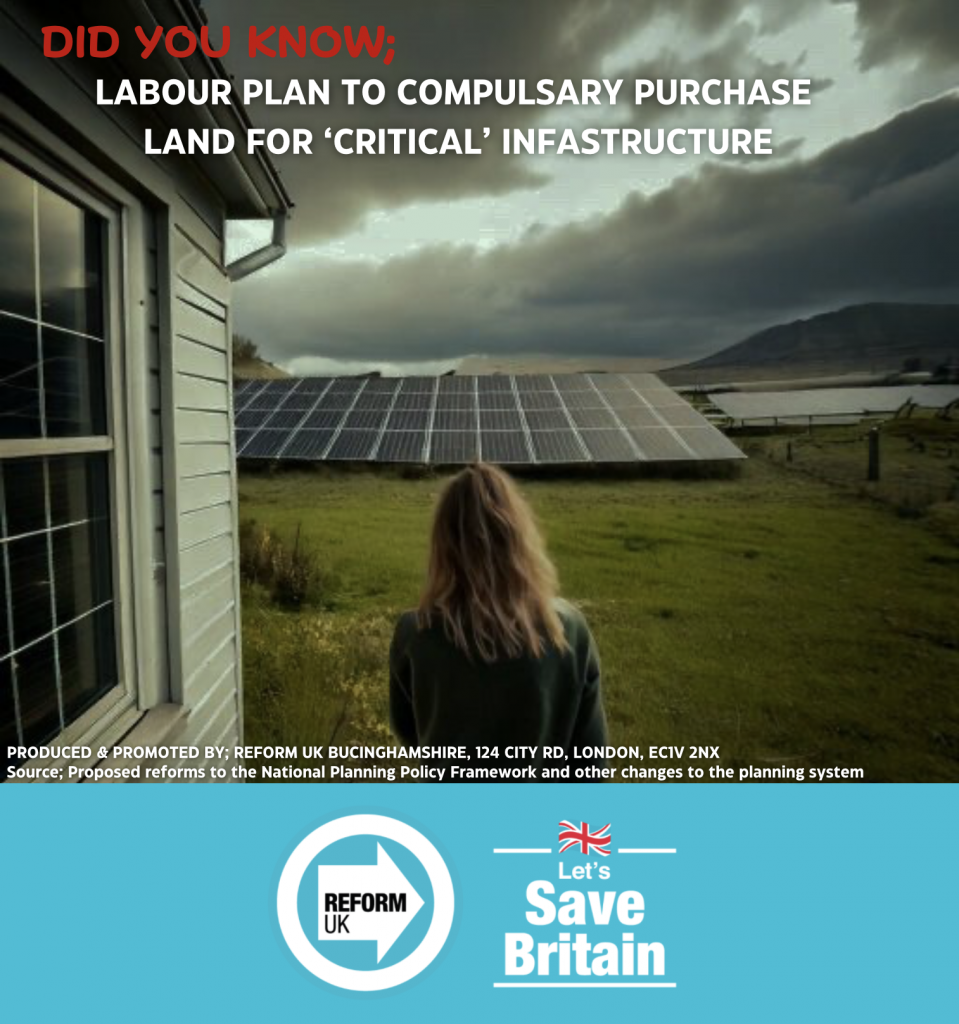
Labour plan to compulsory purchase land for ‘critical’ infrastructure
Support economic growth in key sectors, aligned with the Government’s industrial strategy and future local growth plans, including laboratories, gigafactories, datacentres, digital economies and freight and logistics – given their importance to our economic future.
Labour plan to increase house building in higher value neighbourhoods, aimed at house price reduction.
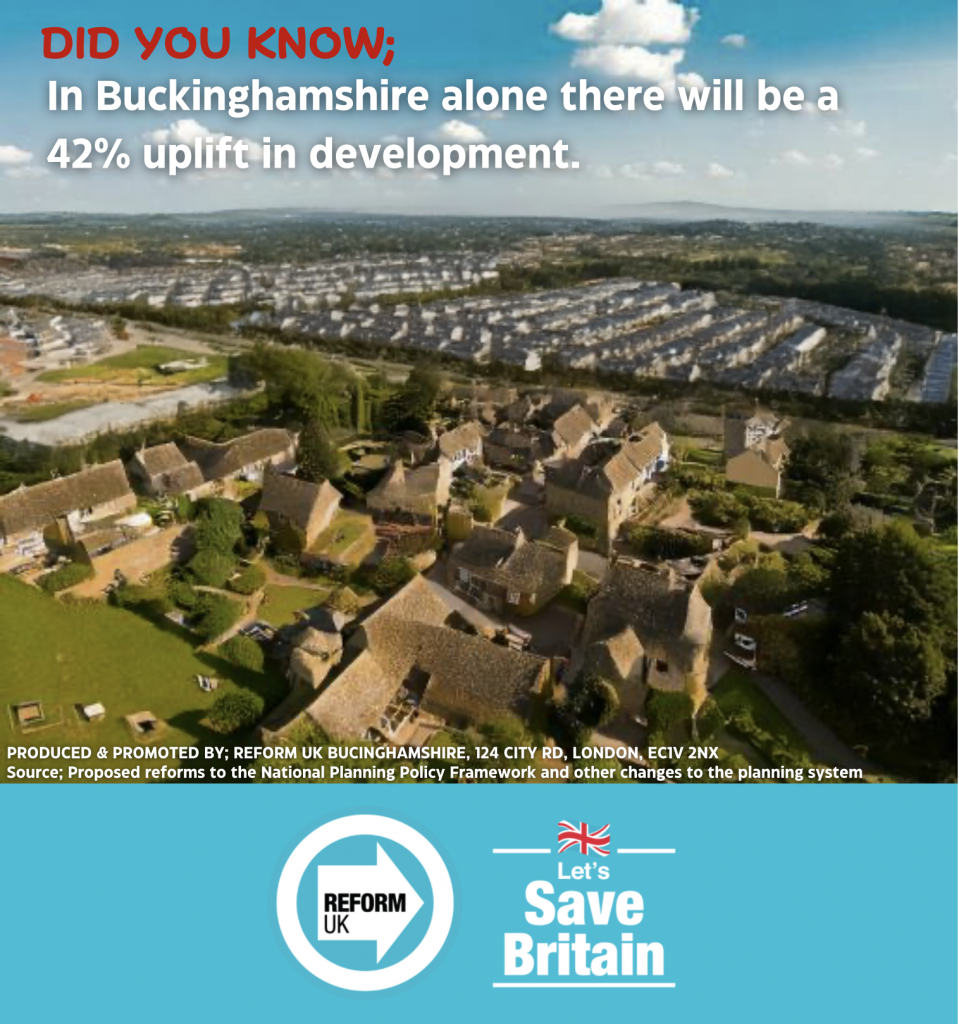
In Buckinghamshire alone there will be a 42% uplift in development and even more if they decide we’re having another new town
Labour don’t mind spoiling the look of existing neighbourhoods
We propose to reverse the changes made in 2023 to the Framework that reference beauty and beautiful in relation to well-designed development.
Land can be built on even if it is used for food production
We therefore propose removing the following text from the footnote: “The availability of agricultural land used for food production should be considered, alongside other policies in this Framework, when deciding what sites are most appropriate for development.”
Labour won’t protect agricultural land
where significant development of agricultural land is demonstrated to be necessary, areas of poorer quality land should be preferred to those of a higher quality
Labour has made building 1.5m homes by 2030 mandatory
We will take the difficult decisions necessary to build what Britain needs. That includes 1.5 million homes in England over the next five years, and crucial energy, water and commercial projects.
Labour believes all this will make us better off
New homes create jobs and investment in construction and ensure people can afford to live where they wish and access high-quality, productive jobs. Clean energy lowers the cost of living and the cost of doing business. Commercial development lets businesses expand and support the economy.
Labour won’t protect habitats
Development of renewables may be proposed in sensitive areas which may include valuable habitats that provide carbon sequestration, including peatlands which are critical for mitigation and adaptation, and provide key habitats for biodiversity.
Labour lowered the building quota for London and raised it for Bucks and other agricultural areas
We are clear that urban centres should be working together across their wider regions to accommodate needs. We are not only strengthening the existing Duty to Cooperate requirement but proposing to introduce effective new mechanisms for cross-boundary strategic planning. This will include short term measures which will strengthen cross-boundary co-operation
Labour wants to centralise power away from local authorities
It is our intention to move to a model of universal strategic planning covering functional economic areas within the next five years.
Local Stories
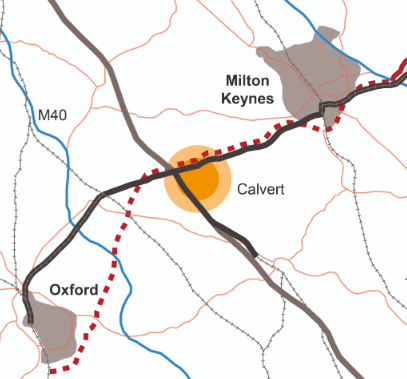
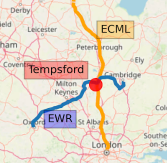
There is a commission currently touring the country to report on suitable locations for New Towns. These have been under consideration for years – ie under both Conservative, LibDem coalition and now Labour governments.
- Areas that provide the greatest opportunities for change such as greater density, in particular the development of large new communities
- The Oxford-Cambridge arc is a top favourite with a new town at Tempsford and the other at Calvert
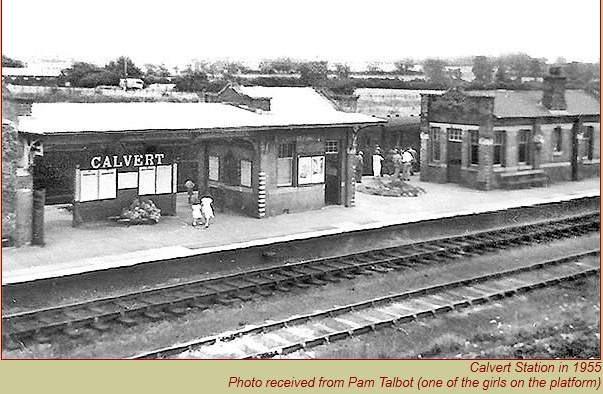
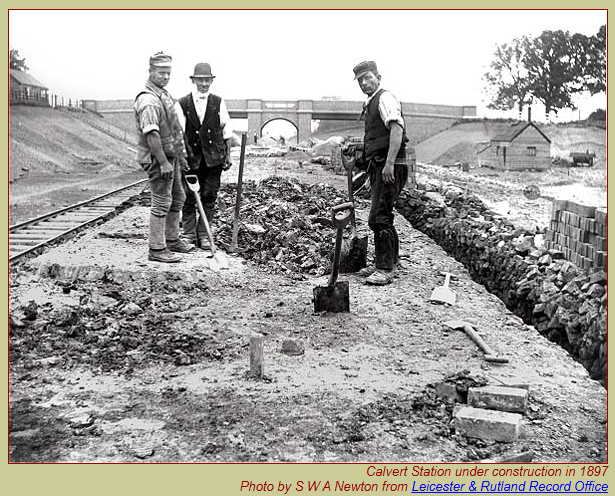
- Actually, Calvert has been targeted for population growth & development for over 100 years.
- This was construction of Calvert Station in 1897 on the former Great Central Main Line between Manchester Piccadilly and London Marylebone